

Free. No sign-up. Two minutes.

How will you feel after quitting nicotine? Start with how you feel today

Answer 12 questions about your energy, sleep, mood, body and money over the last two weeks. You get a score from 0 to 100 for today and a timeline of what usually changes after people quit tobacco or nicotine, with a source for every number. It takes two minutes. No sign-up, and your answers stay in your browser. This is not medical advice.

1 / 15

Before the 12 questionsWhat do you use most?
Before the 12 questionsHow much do you spend on nicotine in a week?

Optional. A rough number is fine. It only feeds the money line in your result.

Before the 12 questionsYour resting heart rate, if your watch shows it

Optional. Leave it empty if you do not know it.

1. Energy and sleepHow is your energy in the afternoon?

Think about the last two weeks.

2. Energy and sleepHow long does it take you to fall asleep?

Think about the last two weeks.

3. Energy and sleepHow often do you wake up at night or too early?

Think about the last two weeks.

4. Calm and focusHow do you feel after three hours without nicotine?

Think about the last two weeks.

5. Calm and focusHow often do you feel anxious or on edge?

Think about the last two weeks.

6. Calm and focusHow easy is it to focus on one task for 30 minutes without nicotine?

Think about the last two weeks.

7. BodyHow often do you notice your heart racing or pounding at rest?

Think about the last two weeks.

8. BodyYou walk up two flights of stairs at a normal pace. How do you feel at the top?

Think about the last two weeks.

9. BodyIf you use pouches or snusHow are your gums where the pouch sits?If you vape or smokeHow are your throat and chest?

Think about the last two weeks.

10. BodyHow well do you taste and smell food?

Think about the last two weeks.

11. Control and moneyHow soon after waking do you use nicotine?

Think about the last two weeks.

12. Control and moneyHow do you feel about what you spend on nicotine?

Think about the last two weeks.

Example result

  • 56%Energy and sleep
  • 56%Calm and focus
  • 75%Body
  • 33%Control and money

58 out of 100

Noticeable drag

Weakest area: Control and money, 33%

See the full result

ZyQuit: Quit Pouches & SnusApp for iPhone and iPad

You have the picture for today. ZyQuit gives you a plan down to zero.

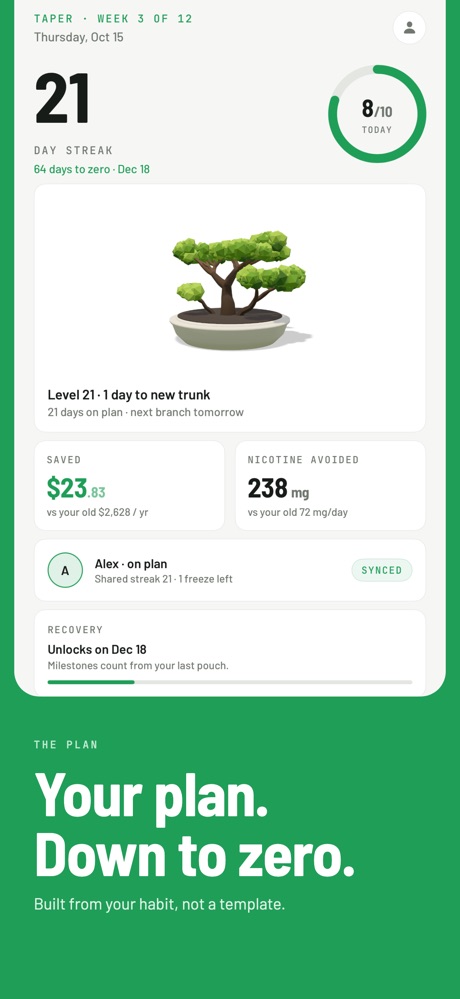
  • ZyQuit Today screen: 21 day streak, 8 of 10 pouches today, money saved
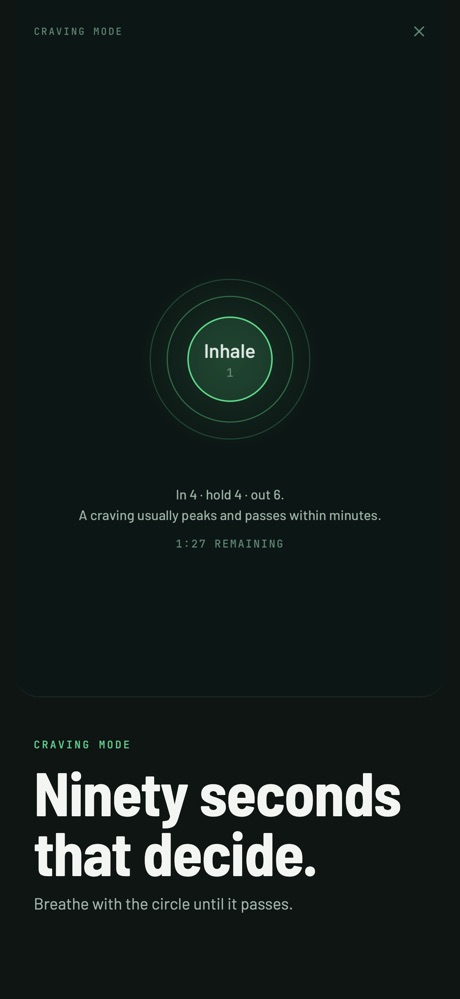
  • ZyQuit craving mode: a 90-second breathing circle
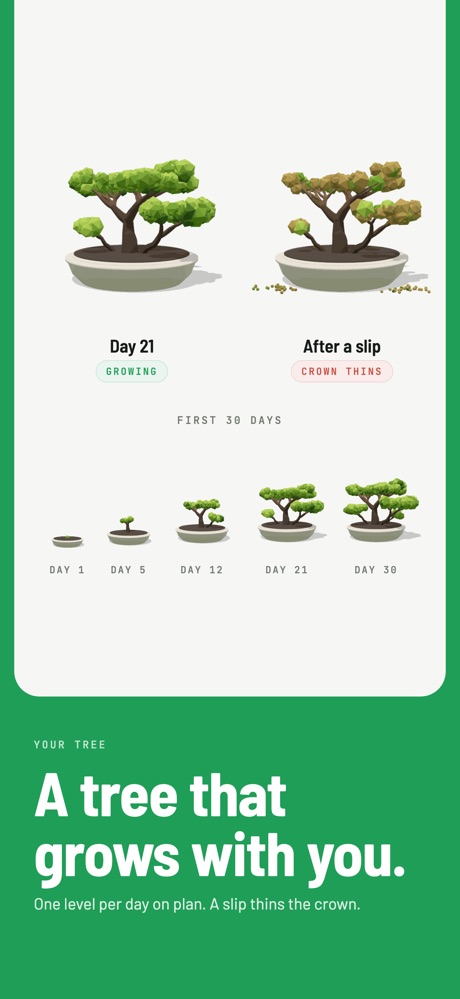
  • ZyQuit tree that grows one level for each day on plan
  • A taper of 4, 6, 8 or 12 weeks, or cold turkey
  • A daily limit that steps down every week
  • SOS breathing and a recovery timeline
Download on the App Store

Free to download. 7-day free trial, then a subscription.

QR code that opens ZyQuit on the App Store

Scan with your iPhone camera

The score describes how you feel today. It is not a forecast and not a diagnosis.

What your answers say, area by area

Energy and sleep56%

If this area scores under 60%

Sleep often gets worse for a while right after quitting. The CDC lists trouble sleeping as a common withdrawal symptom and says it gets better. We found no reliable figure for how long it takes, so we do not give one.

If this area scores 60% or more

Your sleep and energy look steady. You may have a few rough nights in the first weeks after quitting. The CDC says this gets better.

Sources: CDC, 7 Common Withdrawal Symptoms; NCI, Handling Nicotine Withdrawal and Triggers

Calm and focus56%

If this area scores under 60%

Feeling tense between doses is often withdrawal starting, and the next dose only resets the clock. After quitting, if anxiety shows up, it usually builds over the first 3 days and may last several weeks. Irritability peaks within the first week and may last 2 to 4 weeks. A 2021 Cochrane review of 102 studies in smokers found fewer anxiety, depression and stress symptoms in people who quit than in people who kept smoking. The evidence is low to moderate certainty. In people who stop smoking, the NHS says the mental health benefits can start in as little as 6 weeks.

If this area scores 60% or more

You stay calm without nicotine most of the time. The first week after quitting can still be tense: symptoms usually peak in the first 3 days and ease over the first month.

Trouble concentrating is common in the first days after quitting.

Sources: NCI, Handling Nicotine Withdrawal and Triggers; Cochrane review 2021, 102 studies in smokers; NHS Better Health; CDC, 7 Common Withdrawal Symptoms

Body75%

If this area scores under 60%. Pouches and snus

Nicotine speeds up the heart while a pouch is in. In a lab study a 20 mg pouch raised heart rate by about 12 beats per minute and a 30 mg pouch by about 25. A 6 mg pouch raised it slightly. There is no good long-term data yet on resting heart rate after people stop using pouches, so we give no number. Source: Mallock-Ohnesorg and others, Frontiers in Pharmacology 2024 (15 smokers, one pouch for 20 minutes); CDC, Nicotine Pouches

If your gums are often sore

Sore gums where the pouch sits are worth showing to a dentist.

If this area scores under 60%. Cigarettes

Within 20 minutes of the last cigarette heart rate and blood pressure drop. Resting heart rate is on average 5 to 15 beats per minute lower within a day of stopping. In 2 to 12 weeks circulation improves and lung function increases. In 1 to 9 months coughing and shortness of breath decrease. Taste and smell improve within days or weeks. After 1 year the risk of a heart attack is half that of a smoker. Sources: WHO, Health benefits of smoking cessation; Herbec and others, Nicotine & Tobacco Research 2020; NHS Better Health

If you smoke and enter a resting heart rate between 50 and 100, the result turns the 5 to 15 beats into your own range. Above 100 it says a check with a doctor is worth it.

If this area scores under 60%. Vape

Nicotine raises heart rate while you use it. For vaping we found no reliable recovery numbers from the sources we trust, so we do not show any. If you also smoke, the smoking timeline applies to you.

If this area scores 60% or more

No strong signals from your body right now. Nicotine still raises heart rate while you use it.

Control and money33%

If this area scores under 60%

Using nicotine soon after waking is linked to stronger dependence in studies of smokers. Quitting is still possible. The first days may be harder, and a plan helps. Time to the first dose after waking is one of the questions in the Fagerström Test for Nicotine Dependence (Heatherton and others, 1991).

If this area scores 60% or more

Your answers show no strong pull in the morning and no strain on your budget.

Your money

If you enter what you spend in a week, the result shows that number for a year (52 weeks) and for five years.

Most recovery research was done with smokers. For nicotine pouches the CDC says the short and long-term effects are still being studied, so where there is no number we do not show one.

What usually changes after quitting, and when

Withdrawal after quitting tobacco products (NCI)
WhenWhat usually happensSource
First 3 daysWithdrawal symptoms are at their peak.NCI
First weekThe hardest week. Irritability peaks.NCI
2 to 4 weeksIrritability may last 2 to 4 weeks. Anxiety may last several weeks.NCI
Up to a monthIf you feel mildly down, it usually starts in the first day and passes within a month. People with a history of depression can have stronger symptoms.NCI
First month and afterSymptoms get weaker. Occasional mild cravings can show up months or even years later.NCI
WeightWeight gain is usually less than 10 pounds.NCI

These stages come from the US National Cancer Institute and apply to smoking and other tobacco products.

If you also smoke, the smoking numbers below apply to you too.

After quitting cigarettes
WhenWhat usually happensSource
20 minutesHeart rate and blood pressure drop.WHO
12 hoursCarbon monoxide in the blood returns to normal.WHO
24 hoursNicotine in the blood drops to zero.CDC
2 to 12 weeksCirculation improves and lung function increases.WHO
1 to 9 monthsCoughing and shortness of breath decrease.WHO
As little as 6 weeksYou may start to feel the mental health benefits.NHS
1 yearThe risk of a heart attack is half that of a smoker.NHS
10 yearsThe risk of death from lung cancer is half that of a smoker.NHS

These numbers come from studies of smokers. They are not shown for pouches or vaping.

Not medical advice. If you take medication or have a heart or mental health condition, talk to a doctor before you quit.

How the score works

Each of the 12 questions has four answers worth 3, 2, 1 or 0 points. The first answer in each list is worth 3. Your score is the sum divided by 36, shown as a number from 0 to 100.

Each area gets its own percentage the same way: Energy and sleep from questions 1 to 3, Calm and focus from 4 to 6, Body from 7 to 10, Control and money from 11 and 12.

80 to 100 is “Doing well”, 60 to 79 is “Some drag”, 40 to 59 is “Noticeable drag” and 0 to 39 is “Heavy drag”. The three questions at the start do not change the score.

Example: answers that add up to 21 of 36 points give 58 out of 100, “Noticeable drag”. In that example Control and money is the weakest area at 33%.

We made this score for this page. It is a way to look at your own answers. It is not a clinical scale and it does not predict how you will feel after quitting.

Questions people ask

How long after quitting nicotine do you feel better?

Withdrawal is usually worst in the first week and eases over the first month. In people who stop smoking, the NHS says mental health benefits can start in as little as 6 weeks.

How long after quitting Zyn do you feel normal?

There is no study that answers this for pouches. Nicotine withdrawal in general usually peaks in the first 3 days and eases over the first month. For some people symptoms last several months.

Does heart rate go down after quitting nicotine?

In smokers, yes: on average 5 to 15 beats per minute lower within a day. For pouches there is no long-term data yet.

Does quitting nicotine improve sleep?

Sleep often gets worse first. The CDC lists trouble sleeping as a withdrawal symptom and says it gets better. We found no reliable number for when.

How long does anxiety last after quitting nicotine pouches?

For tobacco products in general, if anxiety shows up, it usually builds over the first 3 days and may last several weeks. In studies of smokers, people who quit report less anxiety than people who continue.

When does energy return after quitting nicotine?

We found no reliable figure and do not want to invent one.

Is this medical advice?

No. It is a self-check with public health sources. If you have felt low for two weeks or more, talk to a doctor. In the US you can call or text 988 any time, and 1-800-QUIT-NOW gives free quit coaching.

Keep reading

Sources, checked November 18, 2026

Updated November 18, 2026.

This page is general information and a self-check. It is not medical advice and it does not diagnose anything. ZyQuit is not affiliated with any nicotine or tobacco brand. ZYN is a trademark of its owner.